Understanding Mortgage Rates: What's Changing?
Navigating the Tides: Understanding Interest Rates and Your Mortgage
After a period of cautious optimism where mortgage rates began to fall, the property market is once again facing a shift in the economic winds. While the Bank of England recently opted to hold its base rate steady, other global factors are beginning to influence the cost of borrowing here in the UK.
For buyers, sellers, and homeowners, understanding these undercurrents is crucial for making confident and informed decisions. At Pinewood Properties, we believe in empowering our clients with clarity. This article breaks down the latest developments, explains what they mean for you, and offers our expert advice on how to navigate the path ahead.
The Bank of England's Holding Pattern
In its latest meeting, the Bank of England's Monetary Policy Committee voted to maintain the UK's base interest rate at 5.25%. This decision to hold rates, rather than increase them further, was widely anticipated and signals a 'wait-and-see' approach as the Bank monitors inflation.
While a stable base rate is generally welcome news, it's no longer the only factor driving mortgage pricing. The stability we hoped for is now being tested by external pressures, leading to a new conversation around a less-discussed but highly influential metric: the swap rate.
What Are Swap Rates and Why Do They Matter?
You may have seen the term 'swap rate' appearing more frequently in financial news. So, what is it?
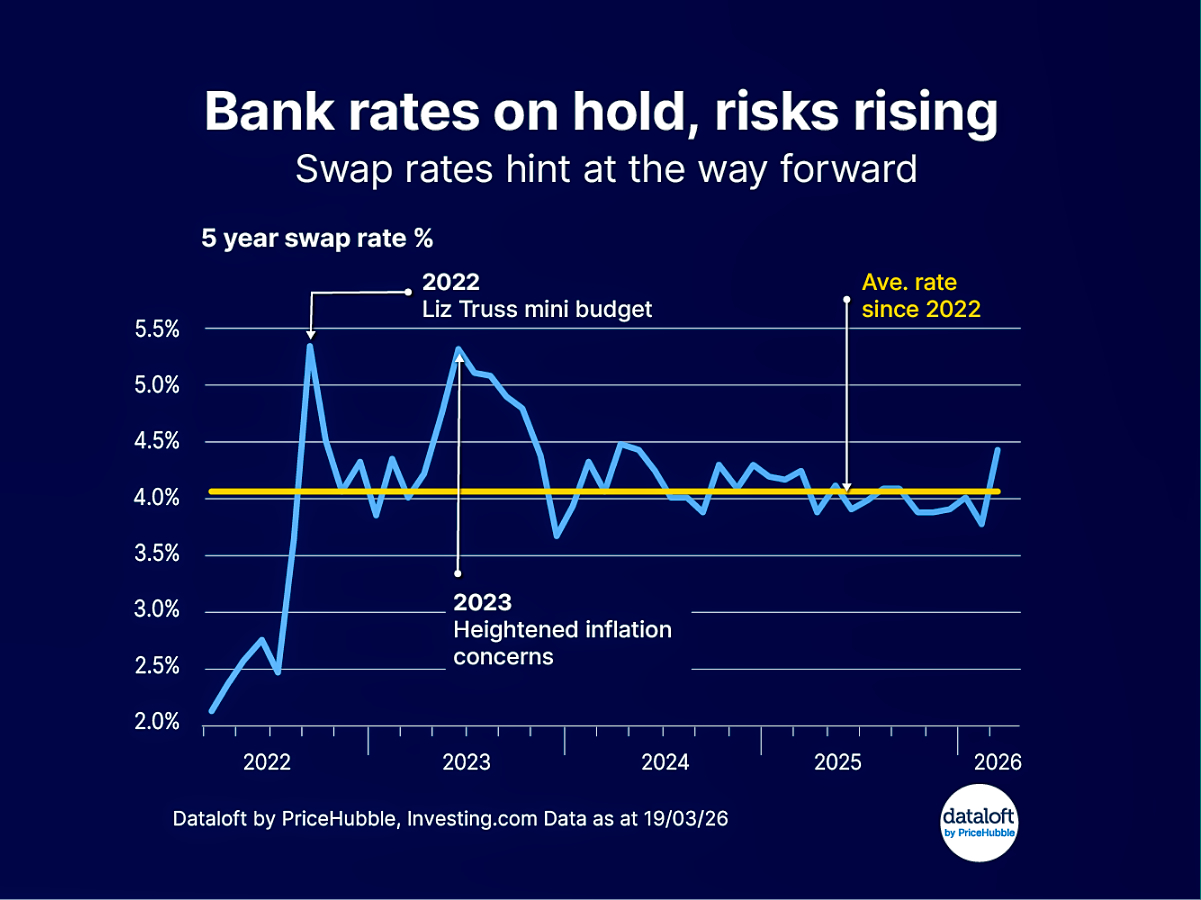
In simple terms, a swap rate is the rate at which financial institutions lend money to one another over a set period. The 5-year swap rate is particularly important because it acts as a primary benchmark for lenders when they price their 5-year fixed-rate mortgages.
Think of it as the wholesale cost for lenders. When this cost goes up, the price they offer to you—the borrower—is likely to follow suit, even if the Bank of England's base rate hasn't changed.
A Turn in the Tide: Why Are Swap Rates Rising?
Recently, the market has seen a noticeable uptick in the 5-year swap rate. This has reversed the gentle downward trend in mortgage rates we enjoyed at the start of the year and has caused some lenders to re-price their products upwards.
The primary cause for this shift is global uncertainty. Heightened geopolitical tensions, particularly the conflict in the Middle East, have introduced a new layer of risk into global financial markets. This uncertainty can impact future inflation forecasts, making long-term lending a riskier proposition for banks. To mitigate this risk, they increase the rates at which they lend to each other, and this cost is then passed on to mortgage customers.
Keeping a Sense of Perspective
While any increase in borrowing costs is unwelcome, it's important to view the current situation with perspective. The recent rise in swap rates, though unsettling, is modest compared to the dramatic spikes we witnessed during previous market shocks.
The volatility following the 'mini-budget' in late 2022 saw swap rates soar to over 6%.
A similar surge occurred in mid-2023 amid fears of persistent high inflation.
Today's levels, while higher than a few weeks ago, are still significantly below those peaks. This is not a repeat of past crises, but rather a market adjustment to new global risks.
Navigating the Current Mortgage Market: Our Advice
Understanding these trends is the first step. The second is taking decisive action. Here is our guidance for buyers and homeowners in the current climate.
For First-Time Buyers
If you are in a position to buy and have found a property, the landscape has become more urgent. A mortgage rate you are offered today may not be available in a few weeks.
Act with purpose: Work closely with your mortgage broker to secure a mortgage offer as soon as possible. This locks in your rate and protects you from potential near-term increases.
Get prepared: Ensure your deposit is ready and all your documentation (payslips, bank statements) is in order to avoid delays.
For Homeowners and Movers
If your current fixed-rate deal is ending within the next six to nine months, now is the time to start planning.
Look ahead: You can typically secure a new mortgage offer up to six months in advance. This allows you to lock in a rate now.
Keep your options open: The benefit of securing a deal early is that if rates happen to fall before your new term begins, you can usually switch to a better deal with the help of your broker. It gives you a safety net against rises while retaining flexibility.
For All Property Owners and Buyers
Seek professional advice: An independent mortgage broker is your most valuable asset in a shifting market. They have a comprehensive view of the products available—including lender-exclusive deals—and can navigate the complexities on your behalf.
Focus on your long-term goals: While market fluctuations can be unnerving, your property decisions should always be rooted in your personal and financial circumstances. A good home is a long-term investment in your future.
Your Trusted Partner in Property
The property market is intrinsically linked to wider economic and global events. While we can't control these forces, we can provide the expert insight and tailored advice you need to navigate them successfully. At Pinewood Properties, our commitment is to serve as your trusted advisor, offering clarity when you need it most.
Whether you're taking your first step onto the ladder, considering your next move, or reviewing your property portfolio, our team is here to provide the support you need. Get in touch with us today for a conversation about your goals and how we can help you achieve them in the current market.